
A Guide to Modern Water Quality Solutions for Growing Families
A Guide to Modern Water Quality Solutions for Growing Families
When most people think about water quality, they think about filling up a glass. But if you’re thinking about water for a growing family, a more important question might be what that water is doing before it ever gets to someone’s lips, to your pipes, your hot water system, your daughter’s long soak in the bath, and the fancy new tapware in your ensuite. Treating water at the point of entry, rather than at the point of use, opens up a world of possibilities.
The Hidden Cost Sitting in Your Hot Water System
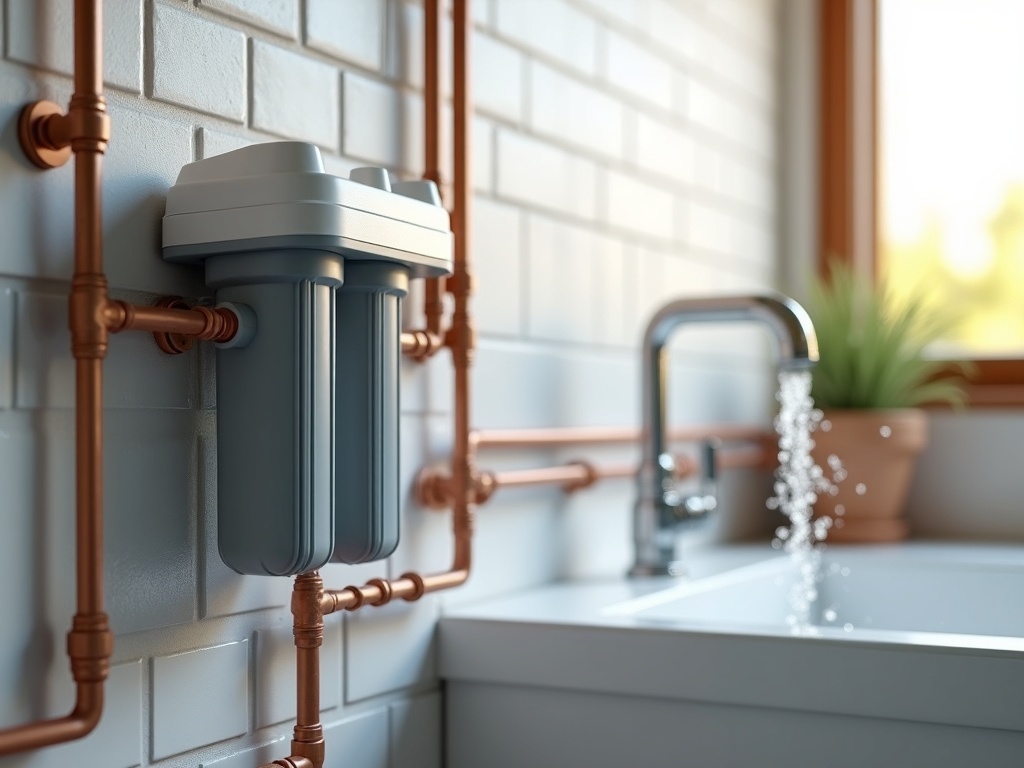
Minerals will inevitably be deposited, but conditioning water first helps control the process. Water that’s been filtered and softened has fewer atoms ‘available’ to react with heating elements and tank walls, and so they’ll run more efficiently for longer. A whole house water filtration system positioned at the point of entry acts as a first defense for the entire plumbing network, helping safeguard investments both large and small, and stave off cold showers for a few extra years.
What Your Kids Absorb in the Shower
This is the part that catches most parents off guard. Children’s skin also absorbs a greater proportion of what’s in the water during a bath or shower as compared to their body weight than adult skin does. Chlorine, chloramines and VOCs, the sorts of things that are used to disinfect municipal water or industrial solvents to clean water, aren’t neutral upon touching skin. They react with it. And if your kid is in a twenty minute bath, they have contact time.
As with volatile organic compounds found in municipal supplies, activated carbon filtration can scavenge VOCs and chemical disinfectants before the water leaves any tap in the house. That’s the difference between a kitchen filter and a point-of-entry system, one protects a glass of water, and the other protects the shower your youngest is in every night.
Protecting What You’ve Already Paid For
Investing in new tap fixtures is expensive. Nobody wants to see a degraded expensive tapware set or showerhead, a stained internal of a recently installed dishwasher, or prematurely blocked aerators on newly installed toilets and taps. The micron rating of a whole-home pre-filter isn’t something most people think about, but that’s easy to fix at the time of purchase, and expensive to ignore. Most top-shelf tapware manufacturers specify a maximum level of sediment in the water to qualify for warranty protection.
Sizing For How Your Family Actually Uses Water
The most often made mistake families make when they grab a filtration system is to weigh the costs and completely ignore flow rate. GPM – gallons-per-minute, decides whether your system can keep up when two showers, the dishwasher, and a washing machine are kicking at the same time. For a three or four-bathroom house, this isn’t a hypothetical. It’s a Tuesday morning.
An undersized system drives pressure drops that go all over like a wet blanket, and can cause some of the high-quality filtration media in your systems to bypass the filtration and turn your system effectively into a bad undersized system. Throwing the actual peak demand of your household through the system’s rated GPM ensures you’re good to go when you need to be good to go, not just when demand is low.
Other media filter systems need regular backwashings to keep doing their jobs. It’s a low-effort process, but you need to do it. Systems that you don’t maintain quietly start underperforming, and that’s how most water quality problems start life.
Building a Home That Works Harder For Your Family
Advocating for whole-house filtration isn’t about scare tactics. It’s about understanding that your plumbing and your family’s health rely on the same water source. Clean water entering the heater, the shower, and the faucet protects the property and the people using it. That’s a good investment in home care on all fronts.
Filtered water touches more of daily life than most people realise. It’s the water your kids drink straight from the tap after school, the water you cook pasta in, the water that rinses the vegetables before dinner. When sediment, chlorine, and other common contaminants are removed at the point of entry, every one of those moments benefits without any extra effort. No filling jugs, no buying bottles, no second-guessing whether the water tastes off, it’s just clean water, every time.
There’s also the practical side of keeping a home running smoothly. Hard water and sediment build up quietly inside appliances, shortening the life of washing machines, dishwashers, and hot water systems. A whole-house filter works as a first line of defence, reducing the wear that adds up over years of use. Fewer repairs, longer-lasting appliances, and less limescale scrubbing, it’s one of those home improvements that earns its keep long after installation.
